
Most dam failures don’t come out of nowhere.
In many cases, there were warning signs. A little seepage that slowly increased. A spillway that eroded a bit more each year. Trees that were allowed to grow until their roots quietly created pathways for water to move where it shouldn’t.
Dam repair isn’t just about fixing something that’s already broken. It’s about recognizing problems early — before they turn into instability, regulatory action, or, in the worst cases, dam failure.
Below are some of the most common issues dam owners face and how engineers determine when maintenance becomes a true structural concern.
Common Dam Problems That Lead to Dam Repair
Vegetation on an Earthen Dam
Trees growing on an earthen dam might look harmless. In reality, they’re one of the most common long-term risks.
Roots create pathways through the embankment. Over time, especially after old roots decay, those pathways can allow seepage to concentrate and accelerate. Also, during storms, trees may fall over and pull large root balls out of the dam, leaving voids behind.
Even brush and tall grass can be problematic. Heavy vegetation makes inspections harder. If you can’t clearly see the surface of the dam, you can’t spot early signs of erosion, seepage, cracking, and sliding.
An earthen dam needs consistent mowing and healthy grass cover — not trees.
Seepage and Piping Failure
A little seepage isn’t automatically a problem. Many dams have some amount of controlled seepage, and sometimes it’s by design.
The red flag is when water becomes cloudy.
Cloudy seepage suggests soil particles are being carried away. That’s the early stage of piping failure — a condition where water moves fast enough through soil to remove material and create a void. That void can progress upstream toward the reservoir. Once it connects, large volumes of water can flow through it, accelerating erosion and potentially leading to dam failure.
Piping can occur inside an earthen dam or beneath either earthen or concrete structures. It’s one of the most serious issues engineers look for during dam repair evaluations.
Spillway Erosion and Capacity Issues
Spillways are critical. When designed properly, they safely pass floodwater around or over a dam.
Many older dams were built before modern design standards existed. In those cases, spillway capacity may simply be too small by today’s criteria. Others suffer from erosion — earthen spillways develop runnels and headcuts, while concrete spillways can become undermined, allowing water to flow beneath them.
If a spillway cannot safely pass the required design storm, overtopping becomes a real risk. And overtopping is a cause of failure in earthen dams.
Deteriorating Outlet Conduits
Older dams often have steel or cast-iron outlet pipes buried directly within the embankment. After decades underground, corrosion can create rough surfaces on the outside of the pipe. The roughness can interfere with the bond between the pipe and the surrounding soil, creating voids and allowing water to flow along the exterior of the pipe. The flow can cause internal erosion of the embankment, increasing seepage and increasing the potential for dam failure.
Sometimes the corrosion is advanced enough to create holes through the wall of the conduit. Water seeping from the embankment into the conduit can transport embankment soil into it, increasing the risk of internal erosion and potential failure of an earthen dam.
Engineers look for signs of seepage around the outlet conduit. Excess seepage in this area is not something you want to ignore.
What Causes Dam Failure?
Dam failure usually results from one of a few mechanisms:
- Overtopping during extreme storm events
- Piping (internal erosion) within an earthen dam
- Foundation instability beneath the structure
- Slope failure (earthen dams)
- Structural sliding or overturning (concrete dams)
Often, the process is gradual — until it isn’t. A long period of unnoticed seepage. Thick vegetation growing up in a spillway. A rusting outlet pipe. A retaining wall that leans slightly more each year. Any of these seemingly slow processes can quickly turn into a crisis.
When Does Dam Repair Require an Engineer?
Basic maintenance is one thing. Structural repair and functional improvements are another.
Mowing, removing small vegetation, exercising outlet valves, and keeping spillways clear are routine responsibilities. But once repairs affect spillway capacity, structural stability, or seepage behavior, engineering analysis becomes necessary.
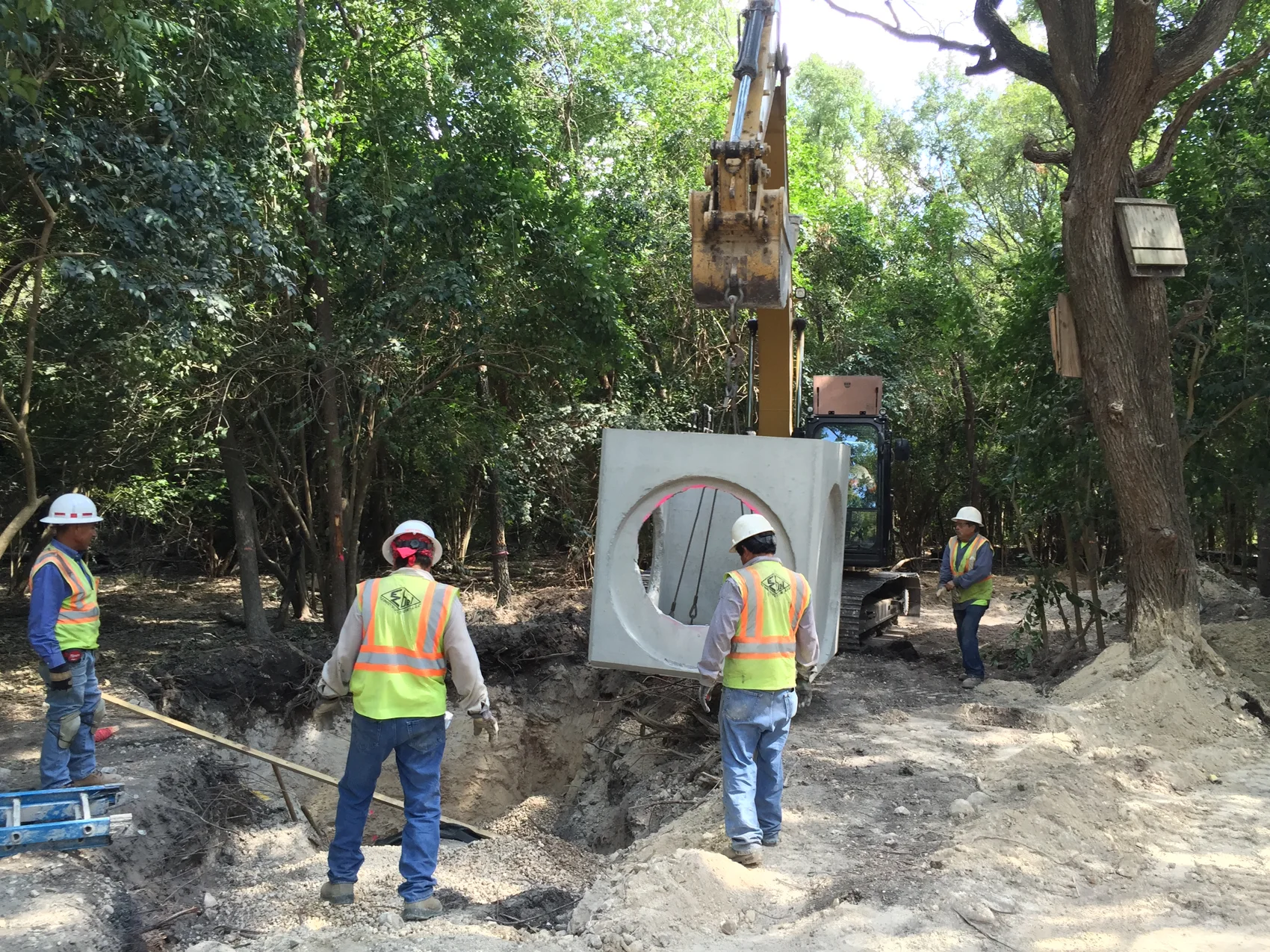
Large tree removal, spillway enlargement, conduit replacement, or visible piping should trigger a call to an engineer.
DIY repairs are common, especially for private or ranch dams. But improper compaction, unreviewed modifications, or failing to comply with regulatory requirements can create far bigger problems — including fines, forced removal orders, or even dam failures.
Dam repair is not an area where shortcuts pay off. Talk to an engineer to protect your investment and to keep downstream areas safe.
How Engineers Evaluate Dam Repair Needs
A proper evaluation begins with reviewing past inspection reports and regulatory notices. Understanding the dam’s history matters.
From there, engineers perform a detailed visual inspection:
- Alignment of the structure
- Connection to abutments
- Seepage patterns
- Erosion indicators
- Condition of riprap and concrete
- Upstream wave protection
- Crest condition
- Spillway condition
Larger dams may include instrumentation.
What Is a Spillway — and Why Does It Matter?
A spillway is the structure that is intended to safely convey high water over or around the dam.
To determine whether a spillway has sufficient capacity, engineers conduct a hydrology and hydraulic study. The required design storm is simulated. Then, through reservoir routing calculations, engineers evaluate how much water levels rise in the reservoir and how much discharge passes through the spillway.
If the spillway cannot pass the design flow safely without overtopping the dam, it must be enlarged or supplemented.
Spillway adequacy is one of the most critical components of dam safety planning.
What Is a Piezometer?
A piezometer is used to monitor water pressure inside or under a dam. That pressure matters. When it builds up beyond allowable levels, it can reduce soil strength, cause excessive seepage, and lead to uplift, all of which can contribute to instability. By installing piezometers and reviewing the readings regularly, engineers can detect changes inside the structure before a problem becomes visible — or dangerous.
What Is an Inclinometer?
An inclinometer measures movement within an embankment by monitoring changes in slope. That matters because such movement is often an early indicator of instability in an earthen dam. By measuring internal changes, engineers can detect embankment creeping and sliding — before the failure occurs.
Earthen Dam vs. Concrete Dam Repairs
Failure modes are affected by structure type.
An earthen dam can experience piping within the embankment and instability of the embankment slopes. An earthen dam can also be susceptible to erosion from overtopping.
Concrete and masonry dams behave differently from earthen dams. They do not experience slope failures but may slide or rotate (overturn). Sometimes parts of these types of dams move in blocks during a failure event.
All dam foundations must be evaluated for seepage beneath the structure and bearing capacity.
How Hazard Classification Affects Dam Repair
Hazard classifications are determined by the number of people downstream of a dam who could be endangered by a failure. High-hazard dams receive greater regulatory scrutiny because their failures could result in more loss of life.
That classification affects design requirements. High-hazard dams often must pass larger design storms — sometimes approaching the Probable Maximum Flood. That can mean substantial spillway upgrades would be required during dam repair projects.
Lower-hazard dams have less stringent design requirements because fewer people are at risk downstream.
The Cost of Waiting
Emergency repairs are almost always more expensive than planned ones.
Emergency repairs often happen because minor maintenance and repairs are ignored for too long. When unmaintained dams are subjected to major storms or breaches, flows often magnify the extent of repairs needed.
For example, unmaintained dams exposed to major storm floods, or those that fail for other reasons, will likely experience large discharges that can move substantial amounts of soil and concrete. The resulting erosion and deposition of sediment create additional damage that must also be repaired. After a failure, the repair costs may be 10 or 100 times greater than the costs of the original repairs that might have prevented much of the damage.
There’s also downstream liability. Dam owners are responsible for the impacts of failure.
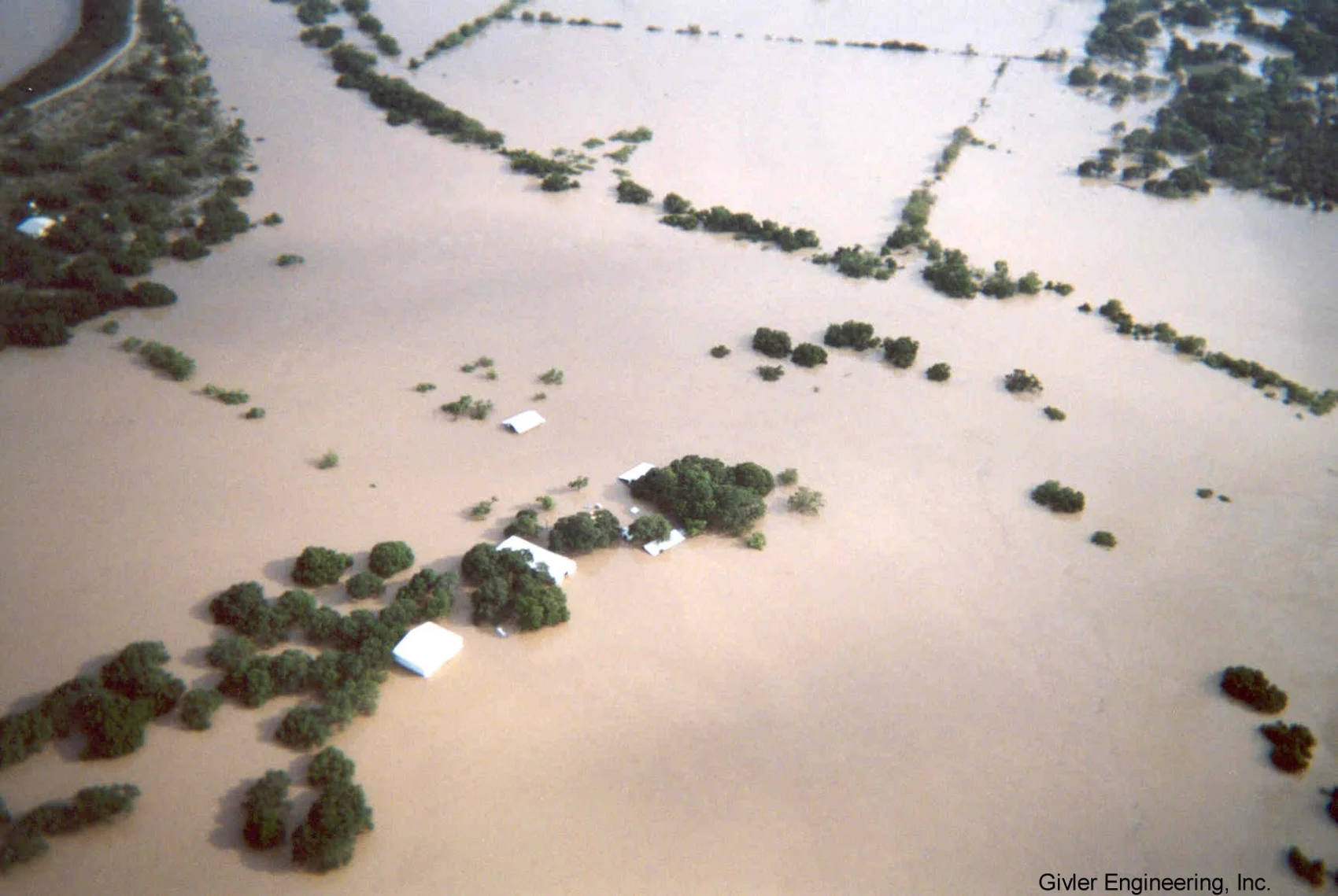
Often, dam owners do not realize how large the risk area is downstream of their dam. Breach inundation maps show how far floodwaters from a dam failure could travel. That visualization helps dam owners understand the magnitude of ownership responsibility and often brings more energy to maintenance and repair approaches.
Early action is almost always less costly than reactive repair.
Final Thoughts: Dam Maintenance and Repair Is Risk Management
Dams age. Materials deteriorate. Standards evolve. Storm patterns change.
Dam maintenance and repair is not about overreacting — it’s about managing risk responsibly.
If you see cloudy seepage, erosion in the spillway, blockage in the spillway, unusual slope movement, or deteriorating outlet pipes, don’t ignore them. Most dam failures are preceded by warning signs. But too many times, warning signs have been ignored.
Addressing problems early, with proper engineering evaluation, protects not only the structure — but the people downstream.
If you need experienced guidance on dam repair, spillway evaluation, or structural assessment, Givler Engineering provides the engineering expertise necessary to protect your investment and your community.